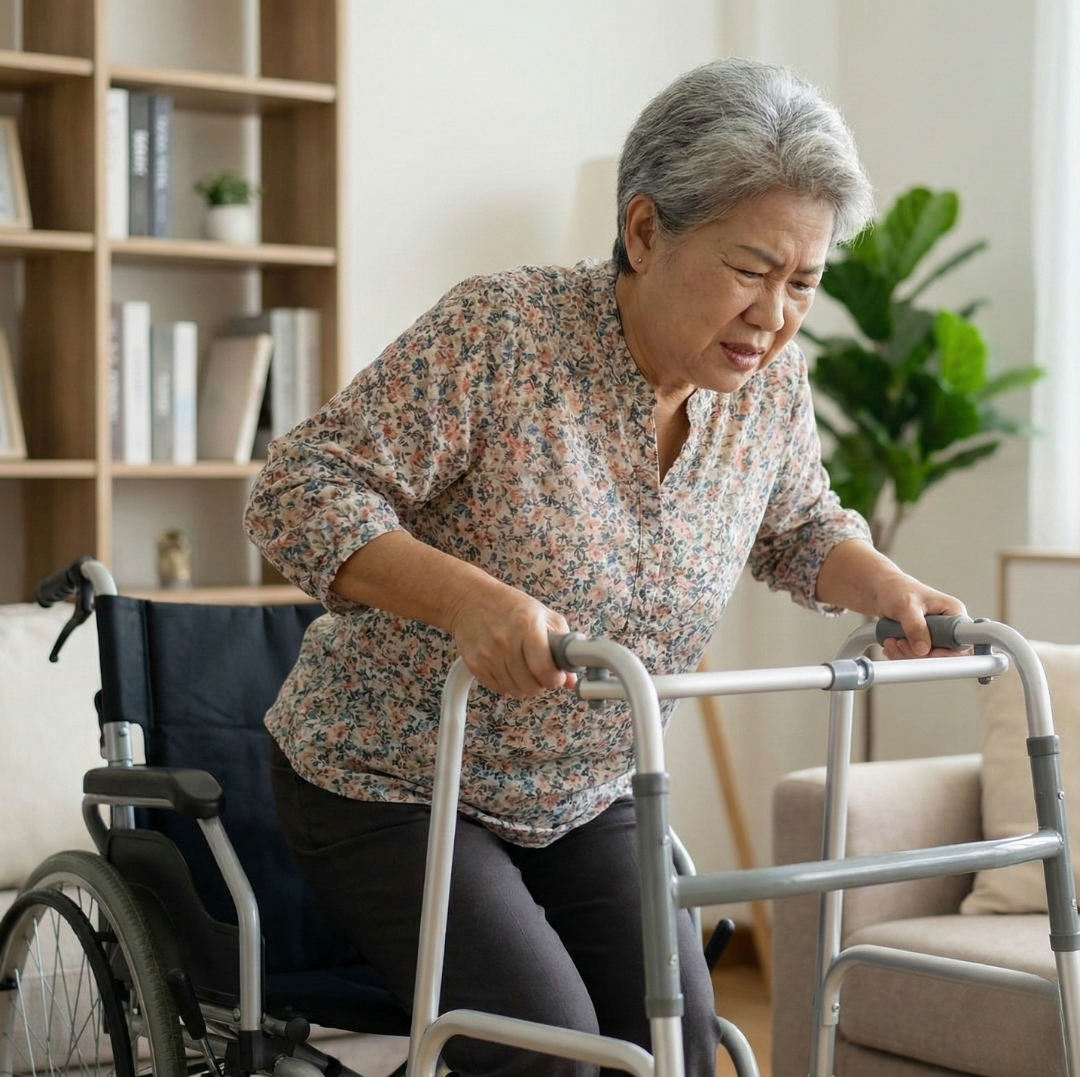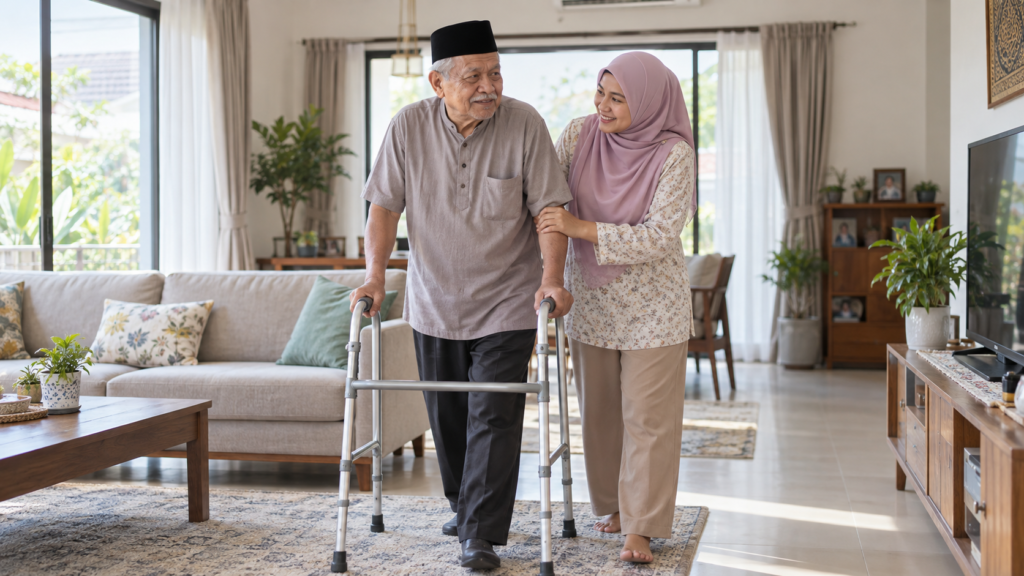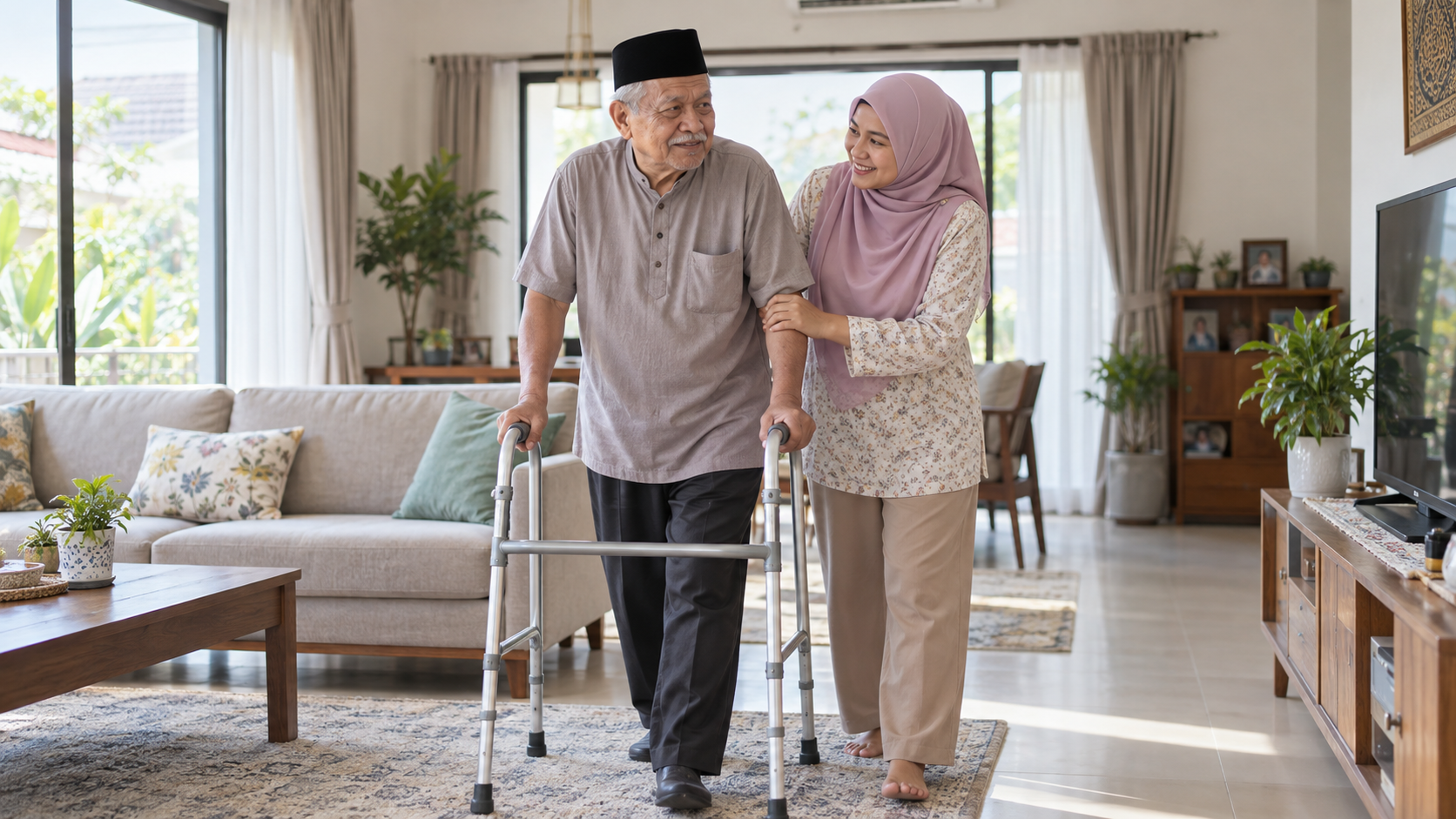
It can be worrying when a loved one’s legs are still weak months after a stroke. Recovery is individual, and persistent weakness does not automatically mean progress has stopped.
In simple terms: ongoing weakness often has more than one cause. The stroke may still affect how the brain activates and coordinates muscles. Less standing or walking can also reduce strength and endurance, while stiffness, pain, balance concerns, fatigue, sleep, medicines and other health conditions may add to the picture.
Why weakness can continue months after stroke
Brain-to-muscle control can still be affected
A stroke can change the timing and reliability of signals from the brain to the muscles. A leg may move, yet still feel slow, weak or difficult to control when it has to accept body weight.
Less activity can reduce strength and stamina
When walking, standing and daily activity are limited, muscles can lose conditioning. This can make everyday movement more tiring, even when a person is working hard in rehabilitation.
Other factors can contribute
- Muscle stiffness or spasticity
- Pain, balance changes or fear of falling
- Low endurance, disrupted sleep or low mood
- Medicines, nutrition or other health conditions
Watch: Why legs can remain weak months after a stroke
Does weakness after six months mean recovery has stopped?
Not necessarily. Improvement may continue over time, but it can be slower and uneven. If weakness is not improving, is getting worse or is preventing everyday tasks, a reassessment can clarify what needs attention.
What usually helps
The right plan depends on the person. A doctor, physiotherapist or rehabilitation team may look at strength, motor control, balance, gait, spasticity, pain, endurance, mobility aids and falls risk. Guided practice, pacing and enough rest can all matter.
For related guidance, read Why Can a Stroke Patient Move Their Leg but Still Be Unable to Walk? and Why Do Stroke Patients Get Tired So Quickly When Walking?.
Where muscle activation may fit
For people with limited mobility, normal exercise can be difficult when they cannot yet stand, walk or complete enough repetitions independently. Alongside appropriate rehabilitation and medical care, some people discuss supportive approaches for muscle activation with their treating clinician.
Dr Kiseki as a home-use supportive option
Dr Kiseki is a home-use low-frequency electrical stimulation device intended to support muscle activation. It is not a cure for stroke, does not guarantee recovery and does not replace physiotherapy, rehabilitation or medical care. If it may be suitable, discuss it with a qualified healthcare professional.
Book a 45-Minute Guided Dr Kiseki Trial to understand the device and ask practical questions.
Frequently asked questions
Why is one leg still weak months after stroke?
Ongoing changes in motor control, reduced activity, stiffness, pain, fatigue and other health factors can all contribute. A reassessment can help identify the biggest barriers.
Can electrical stimulation replace physiotherapy?
No. It is a supportive option that may be discussed alongside, not instead of, appropriate rehabilitation and medical care.
This article is for general education and is not personal medical advice. Seek urgent medical assessment for sudden new weakness, facial droop, speech changes, severe dizziness, chest pain or marked breathlessness.