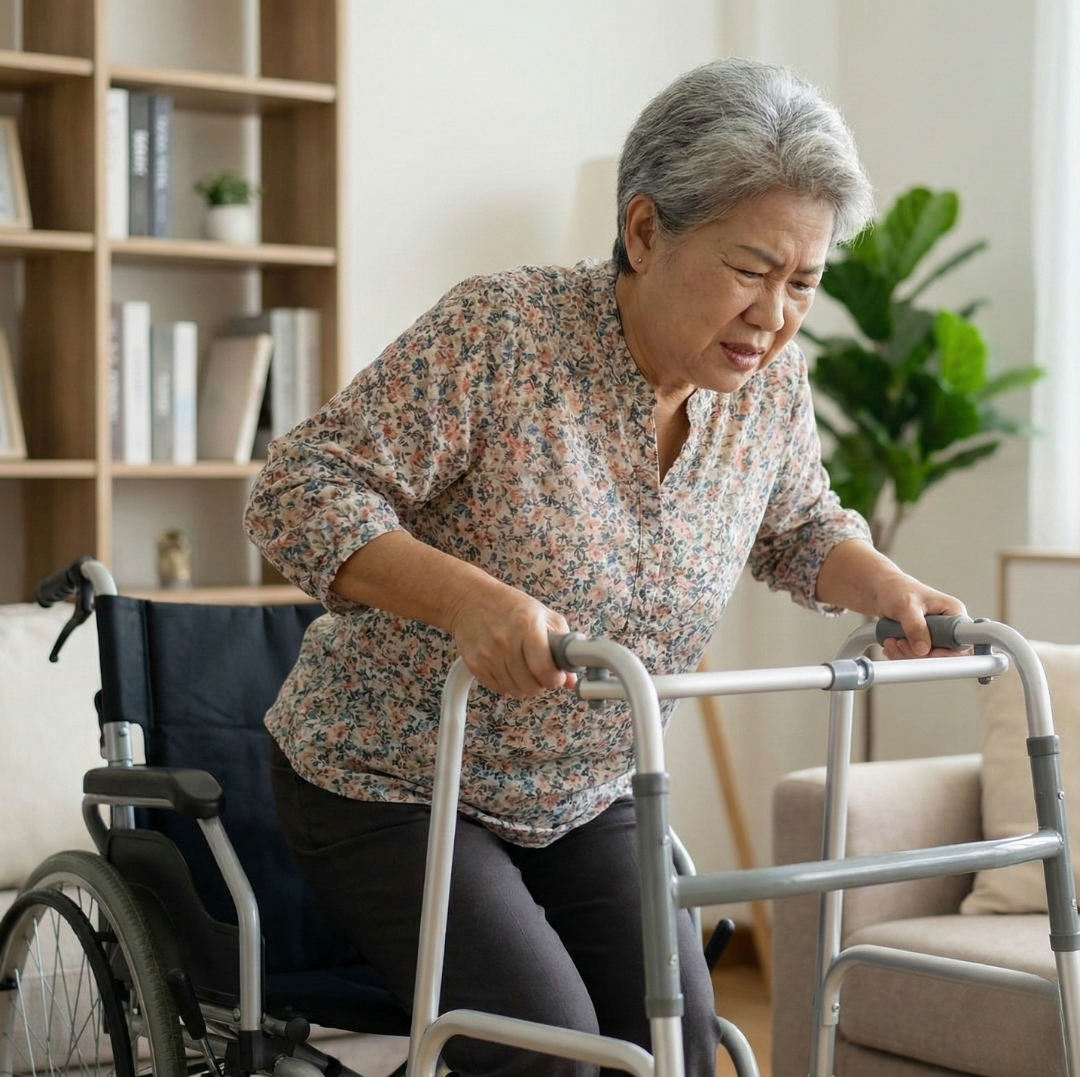
It can be alarming to see a loved one become noticeably weaker after weeks or months in bed. Even when the original illness is improving, standing, walking or getting out of a chair may suddenly feel much harder.
Long periods of bed rest or very limited movement can reduce muscle strength, endurance and confidence. This is often called deconditioning. It can happen after hospital stays, illness, surgery, stroke or any time a person spends much less time moving than usual.
If weakness is new, rapidly worsening, or comes with chest pain, severe breathlessness, fainting, confusion, new facial drooping or new difficulty speaking, seek urgent medical help. For ongoing weakness, the treating doctor and rehabilitation team can help identify the cause and the safest plan.
Watch: What Happens to Your Muscles After Bed Rest
This short video explains why muscles can change during prolonged inactivity and why safe, gradual activity matters.
What happens to muscles during bed rest?
Muscles adapt to how much they are used. When a person spends long periods lying down or sitting, the legs, hips and core may do less work. Over time, muscles can lose strength and may tire more quickly. It can also become harder to coordinate movement, balance safely and keep up with everyday activities.
These changes are not a sign of laziness or lack of effort. They are a common physical response to inactivity, and recovery looks different for every person.
What families may notice
- Needing more help to stand from a chair or get out of bed
- Shorter walking distances or needing more rests
- Unsteadiness when turning or moving from one surface to another
- Legs that shake, feel heavy or tire quickly
- Less confidence using stairs, a walking aid or the bathroom independently
- Avoiding movement because it feels difficult or unsafe
Why getting moving again can feel so hard
Lower strength and endurance
Walking, standing and transferring from bed to chair depend on repeated work from the legs and trunk. When those muscles have not been working as much, small tasks can take more effort.
Balance and coordination
Being upright requires the body to make many small adjustments. After a long period in bed, people may need more concentration to balance, turn and place their feet safely.
Other health factors
Illness, pain, sleep, medicines, appetite, hydration, breathing problems and other conditions can also affect energy and muscle performance. That is why it is important not to assume every change is caused by bed rest alone.
What usually helps
A rehabilitation professional can assess current abilities and advise on safe, individual next steps. Depending on the person, this may include supported sitting, gentle range-of-motion work, transfers, standing practice, walking practice or an exercise plan that progresses at an appropriate pace.
Families can help by making the environment safer, following the clinical plan, allowing adequate rest and noting changes in fatigue, pain or confidence. Avoid forcing a person to walk farther than is safe simply to build strength.
Where muscle activation may fit
For people with limited mobility, normal exercise may sometimes be difficult because they cannot yet stand, walk or complete enough repetitions independently. Alongside appropriate rehabilitation and medical care, some people may consider supportive approaches that help activate muscles.
Dr Kiseki is a home-use low-frequency electrical stimulation device intended to support muscle activation and neuromuscular stimulation. It is not a cure, does not reverse disease, and does not replace physiotherapy, rehabilitation or medical care. Suitability depends on the individual, including their diagnosis, skin condition, implanted devices and professional advice.
Related mobility guides
- Why Do Stroke Patients Get Tired So Quickly When Walking?
- Why Can a Stroke Patient Move Their Leg but Still Be Unable to Walk?
- Why Are the Legs Still Weak Months After a Stroke?
Frequently asked questions
Can muscles weaken after only a short period of bed rest?
Some loss of strength and endurance can begin sooner than families expect, particularly in older adults or people who are already unwell. The exact effect depends on the person and their health condition.
Can a person regain strength after bed rest?
Many people can make progress with a safe, individual plan, but recovery varies. A clinician or physiotherapist can guide activity based on health, balance and safety.
Should a person be pushed to walk every day?
Regular activity can be helpful when it is appropriate, but unsafe or excessive activity can increase the risk of falls or exhaustion. Follow advice from the treating team about what is safe.
Can electrical stimulation replace rehabilitation?
No. It can be a supportive option for selected people but does not replace medical care, physiotherapy, prescribed exercise or safety advice.
A gentle next step
If you would like to understand how home muscle-activation support may fit alongside a professional rehabilitation plan, you can Book a 45-Minute Guided Dr Kiseki Trial. The discussion is for home-use information and suitability, not a substitute for medical assessment.