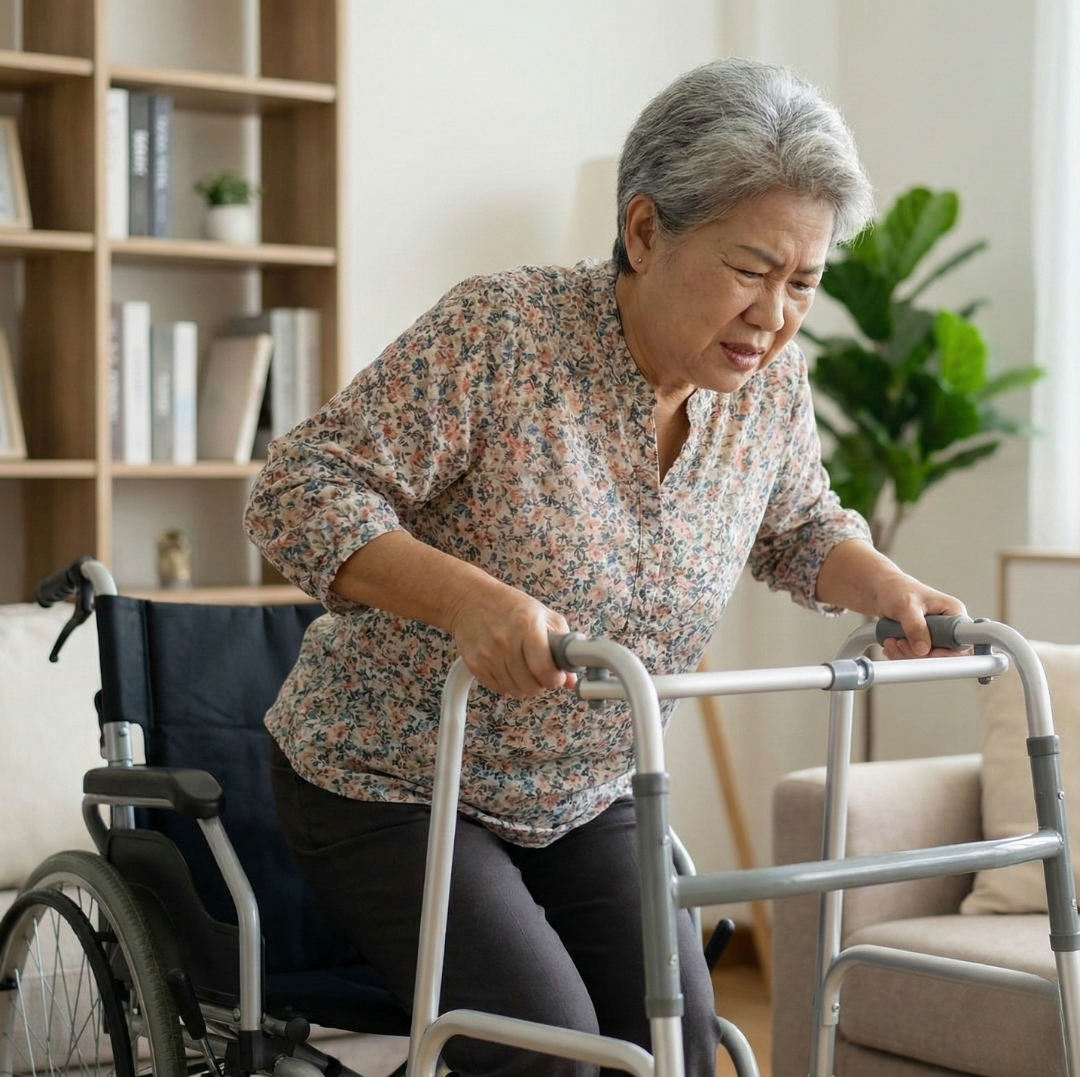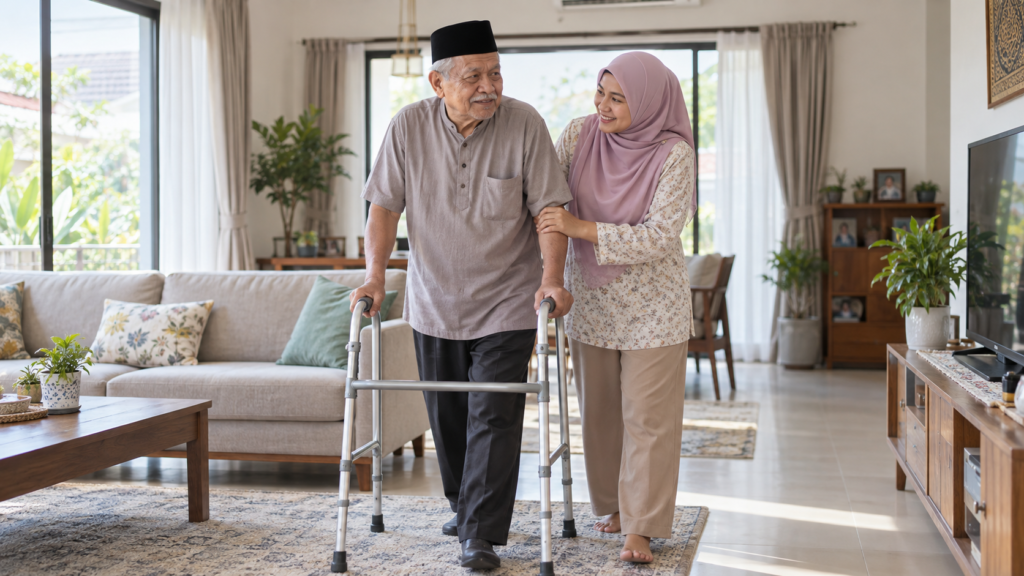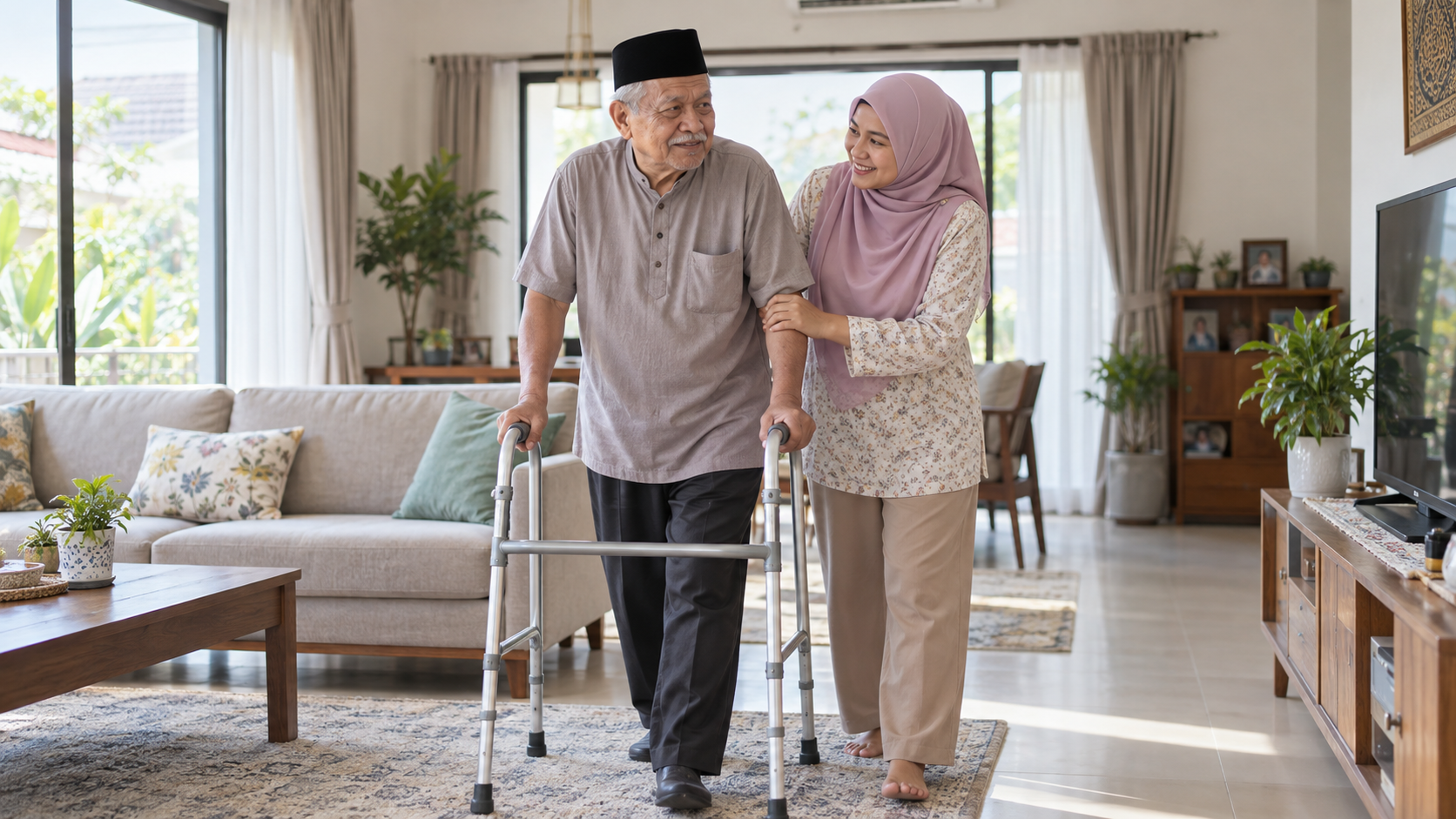
It can be confusing when a loved one can move their leg after a stroke, yet still cannot stand, balance or walk safely. Movement is an important sign, but walking depends on much more than the ability to lift or bend a leg.
In simple terms: after a stroke, the brain and body may not yet be working together efficiently enough for walking. Weakness, slowed coordination, altered sensation, balance problems and low endurance can all make a familiar movement feel difficult.
Why moving a leg is not the same as walking
Walking is a complex sequence. The body has to shift weight onto one leg, keep the trunk steady, place the other foot accurately, react to changes in balance and repeat the pattern again and again. A person may be able to move their leg while sitting or lying down, but still need more recovery before they can safely manage these tasks together.
What families may notice
- The leg moves in bed or when seated, but buckles when weight is placed on it.
- One foot catches the floor or does not clear the ground consistently.
- They need a frame, a rail or someone nearby for support.
- They become tired quickly, especially after only a few steps.
- They appear unsteady when turning, starting or stopping.
These changes can be upsetting, but they are common reasons a rehabilitation team looks at walking in a structured, individual way.
Why walking after stroke can take much more effort
Muscle weakness
A stroke can affect the strength and timing of muscles on one side of the body. Even small reductions in strength can matter when a leg needs to accept body weight and push the body forward.
Coordination and motor control
The brain needs to organise many muscles in the right order. After stroke, the signal may be delayed, uneven or harder to control. The person may understand what they want their leg to do, while the movement still feels slow or unreliable.
Balance and sensation
Standing and walking require ongoing information from the feet, joints, eyes and inner ear. If sensation or balance is affected, a person may not feel secure enough to shift their weight or take a step without support.
Endurance and fatigue
Walking with weakness or altered movement patterns can use more energy than before. That is one reason a person can manage a short distance but then become exhausted. Read our related guide: Why Do Stroke Patients Get Tired So Quickly When Walking?
What usually helps
Recovery plans are individual. A doctor, physiotherapist or rehabilitation team can help assess safety, identify the main barriers and guide suitable practice. Depending on the person, this may involve strengthening, balance work, gait practice, mobility aids and graded activity that builds slowly over time.
Families can help by creating a clear, uncluttered area for prescribed practice, allowing enough rest and avoiding unsupervised walking when there is a risk of falling. New or worsening weakness, chest pain, shortness of breath, fainting, sudden confusion or stroke-like symptoms need prompt medical attention.
Where muscle activation may fit
For people with limited mobility, normal exercise can be difficult when they cannot yet stand, walk or complete enough repetitions independently. Alongside appropriate rehabilitation and medical care, some people discuss additional approaches that support muscle activation or neuromuscular stimulation with their treating clinician.
Dr Kiseki as a home-use supportive option
Dr Kiseki is a home-use low-frequency electrical stimulation device intended to support muscle activation. It is not a cure for stroke, does not guarantee walking recovery and is not a replacement for physiotherapy, rehabilitation or medical care. If it may be appropriate for a person’s circumstances, it should be considered with guidance from a qualified healthcare professional.
Interested in learning how home muscle activation support may fit alongside a rehabilitation plan? You can book a 45-minute guided Dr Kiseki trial to understand the device, ask practical questions and decide whether it is suitable to discuss with the care team.
Frequently asked questions
Can a stroke patient regain the ability to walk?
Recovery varies widely. Many people make progress with time and appropriately guided rehabilitation, but the pace and extent of improvement are individual. A rehabilitation professional can give the most relevant advice after an assessment.
Why can they move their leg in bed but not walk?
Moving a leg in bed does not require the same balance, weight-bearing control, coordination or endurance as walking. Those added demands may still be affected after stroke.
Should a person keep practising walking when they are tired?
Safety comes first. The right amount and type of practice should be guided by the rehabilitation team, especially if there is a fall risk or fatigue is substantial.
Can electrical stimulation replace physiotherapy?
No. It is a supportive option that may be discussed alongside. Not instead of appropriate rehabilitation and medical care.
This article is for general education and is not personal medical advice. Speak with a qualified healthcare professional about individual symptoms, safety and rehabilitation needs.